
 English
 Spanish
 French
 German
 Italian
 Chinese (Simplified)
 Japanese
 Korean
 Arabic
 Portuguese


 Send Inquiry
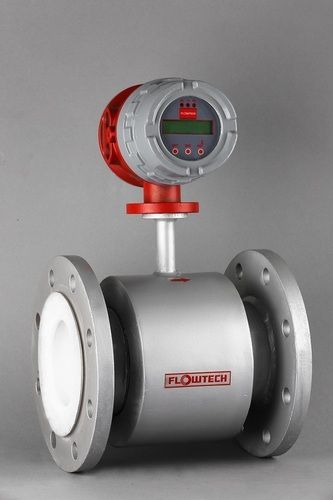
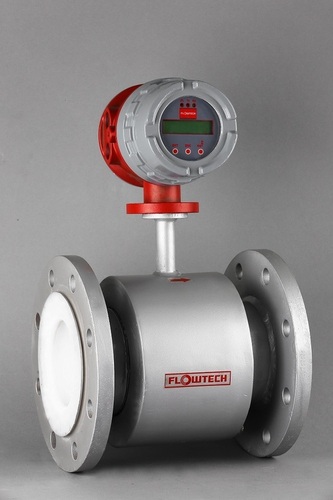
Remote Type Electro Flow Meter
Price 18000 INR/ Unit
MOQ : 01 Unit
Remote Type Electro Flow Meter Specification
- Resistant Feature
- Corrosion resistant, moisture protection
- Usage & Applications
- Industrial water measurement, effluent treatment, process liquids
- Batteries Type
- Powered by AC/DC supply; battery backup optional
- Pressure
- Up to 16 Bar
- Accuracy
- ±0.5% of reading
- Product Type
- Electronic Flow Meter
- Material
- SS & MS
- Measuring Voltage Range
- 30V to 250V AC/DC
- Operating Temperature
- Max. 150 Celsius (oC)
- Frequency (MHz)
- 50/60 Hz
- Insulation Box
- Provided for sensor & electronics safety
- Protection System
- IP67 / Weatherproof and dust proof enclosure
- Size
- 15mm to 600mm pipe diameter compatibility
- Color
- Red, Silver
- Dimension (L*W*H)
- Sensor: custom fit to pipe size, Transmitter: approx. 220mm x 153mm x 93mm
- Weight
- Transmitter: 2.5kg approx; Sensor: varies as per pipe
- Sensor Type
- Remote/Separate sensor with cable connection
- Mounting
- Flanged or threaded installation
- Electrode Material
- SS316 or Hastelloy
- Display
- LCD digital display with backlight
- Application Media
- Suitable for conductive liquids: acids, alkalis, water, slurries
- Communication
- Remote monitoring capable
- Ingress Protection
- Sensor: IP68; Transmitter: IP67
- Power Supply
- 230V AC or 24V DC
- Flow Direction
- Bidirectional measurement supported
- Lining Material
- PTFE/Hard Rubber
- Output Signal
- 4-20mA analogue, RS485 Modbus
- Calibration
- Factory calibrated; on site calibration available
- Cable Length
- Standard 5 metre; extendable up to 50 metres
- Transmitter Type
- Wall mounted or panel mounted remote transmitter
Remote Type Electro Flow Meter Trade Information
- Minimum Order Quantity
- 01 Unit
- FOB Port
- Vadodara
- Supply Ability
- 500 Units Per Month
- Delivery Time
- 1 Week
- Main Export Market(s)
- Asia, North America, Western Europe, Middle East, Central America, Africa
- Main Domestic Market
- All India, Uttar Pradesh, Maharashtra, West Bengal, Nagaland, Uttarakhand, Arunachal Pradesh, Jharkhand, South India, Goa, Manipur, Andaman and Nicobar Islands, East India, Pondicherry, Kerala, Madhya Pradesh, North India, Daman and Diu, Rajasthan, Bihar, Tamil Nadu, Sikkim, Himachal Pradesh, Lakshadweep, Mizoram, Assam, Telangana, Tripura, Chhattisgarh, West India, Haryana, Karnataka, Dadra and Nagar Haveli, Central India, Jammu and Kashmir, Gujarat, Delhi, Meghalaya, Chandigarh, Odisha, Punjab, Andhra Pradesh
Remote Type Electro Flow Meter About
FLOWTECH Measuring Instruments Private Limited is a leading name in the industry for manufacturing, exporting and supplying a prominent quality Remote Type Electro Flow Meter. It is a device often utilized within fuel transfer pump installations and measure the amount of diesel been dispensed into the vehicle. It is widely used in the market for its accurate results. While choosing for flow meters, it is important to consider the flow rate capacity you require and the display type of the flow meter to ensure that it best suits your application. The meter is commonly used in industries like metal, oil, chemical, aviation, scientific research and others. Some intangible factors to consider while choosing flow meters:
Measurement:
Electromagnetic flow meters may have either Direct Current (DC) or Alternating Current (AC) excitation. When systems are AC excited, electrostatic and/or electromagnetic noise may influence the measurements. A DC excited system however, is less sensitive to noise produced by electromagnetic induction, simply because the voltage induced over the electrodes will be a DC voltage. The drawbacks are measurement errors due to electro-chemical polarization between the electrodes and the fluid.The Electromagnetic Flow Meters are excited by a 2.5 Hz square wave and thereby eliminate the drawbacks of both DC and AC systems. A microprocessor receives and measures the amplitude of the pulse with a 16 - bit resolution, and converts and displays the result on the display unit.
Working Principle of Remote Type Electro Flow Meter:
This is working on the principal of faraday`s law which states that when a conductor moves through a magnetic field of a given strength a voltage is produced in the conductor and proportion to the relative velocity between the conductor and the magnetic field.
Remote Type Electro Flow Meter Applications:
- Scientific laboratory
- Research centers
- Chemical industries
FAQS - Remote Type Electro Flow Meter:
What are the uses for Remote Type Electro Flow Meters?
Water and wastewater management, chemical processing, oil and gas, pharmaceuticals, and food and beverage are just a few of the sectors that use remote type electro flow meters. They are widely used to monitor and regulate liquid flow rates in pipelines, industrial operations, cooling systems, and water treatment facilities.
How about the pressure drop?
It exhibits a minor pressure drop and flow disruption.
Can Remote Electro Flow Meters be used with current control systems?
Remote Type Electro Flow Meters are compatible with existing control systems.
Is there a special installation procedure for Remote Type Electro Flow Meters?
Accurate measurements need proper installation.
Remote Type Electro Flow Meter Features:
- It measures the flow rate of conductive liquids using electromagnetic induction principles.
- It can measure a range of flow rates, from low to high, making it a right option for a variety of applications with varying flow requirements.
- It gives accurate and precise flow rate readings.
- It is intended for use with a wide range of conductive liquids, including water, wastewater, chemicals, slurries etc.
Benefits:
In flow measuring applications, the Remote Type Electro Flow Meter has various advantages. For starters, its remote transmitter unit offers for a variety of installation possibilities. Second, they give precise and dependable flow rate readings. With great precision and a wide flow range. Furthermore, these flow meters are often compatible with a wide range of conductive liquids, making them a suitable choice in distinct industries and applications.
Advanced Sensor Technology
The flow meter uses a remote or separate sensor connected with a durable cable, allowing easy installation even in challenging locations. Its robust ingress protection ratings (IP68 for the sensor and IP67 for the transmitter) safeguard against moisture and dust, ensuring consistent performance over time. Custom-fit sensor dimensions enable compatibility with pipe sizes ranging from 15mm to 600mm.
Versatile Installation and Output Options
Designed for flexible mounting, this device supports both flanged and threaded installations. The wall-mounted or panel-mounted transmitter adapts to various setups. Output signals include 4-20mA analogue and RS485 Modbus, allowing integration with existing monitoring systems and remote supervision. Calibrationfactory-set or on-siteensures stringent accuracy requirements are met.
Reliable Measurement for Demanding Applications
Engineered for industrial environments, the flow meter withstands high pressures up to 16 Bar and temperatures up to 150C. It is suitable for a wide range of conductive media, such as acids, alkalis, water, and slurries. Corrosion-resistant construction and optional battery backup provide uninterrupted usage and durability in effluent treatment, process liquids management, and water measurement.
FAQs of Remote Type Electro Flow Meter:
Q: How does the remote type sensor with cable connection enhance installation flexibility?
A: The separate sensor with cable connection allows the flow meter to be installed in hard-to-access or hazardous locations, while the transmitter can be mounted remotely (up to 50 metres away). This setup is ideal for sites where environmental conditions require protective measures or space constraints demand flexible solutions.Q: What media types can the Electro Flow Meter accurately measure?
A: This flow meter is designed to measure the flow of conductive liquids, including industrial water, acids, alkalis, and slurries. Its corrosion-resistant components and durable lining materials ensure reliable performance with aggressive and abrasive media.Q: When is on-site calibration of the flow meter recommended?
A: On-site calibration is advisable when adapting the flow meter to unique process conditions or after installation on new systems. While factory calibration ensures high accuracy (0.5% of reading), periodic on-site calibration can help maintain precision in environments with changing variables or stringent compliance requirements.Q: Where is remote monitoring typically used in flow meter applications?
A: Remote monitoring is frequently utilized in industrial plants, effluent treatment facilities, and manufacturing sites where process control and quick response times are critical. The RS485 Modbus output and 4-20mA analogue signal enable seamless integration with centralized management and SCADA systems.Q: What are the benefits of IP68 and IP67 ingress protection for the device?
A: IP68 rating for the sensor and IP67 for the transmitter provide excellent resistance to moisture, dust, and harsh weather conditions. This protects the electronics and ensures reliable operation in outdoor installations or environments exposed to high humidity, ensuring long-term durability and accuracy.Q: How is power supplied to the flow meter and is battery backup available?
A: The flow meter can be powered by either 230V AC or 24V DC, offering flexibility for different installation sites. An optional battery backup safeguards against power interruptions, ensuring continuous data recording and system reliability during outages.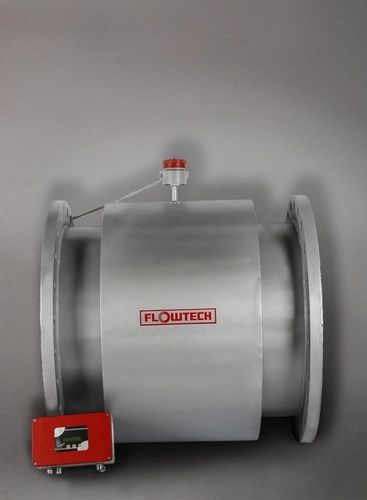

Tell us about your requirement

Price:
Quantity
Select Unit
- 50
- 100
- 200
- 250
- 500
- 1000+
Additional detail
Mobile number
Email

More Products in Electromagnetic Flowmeter Category
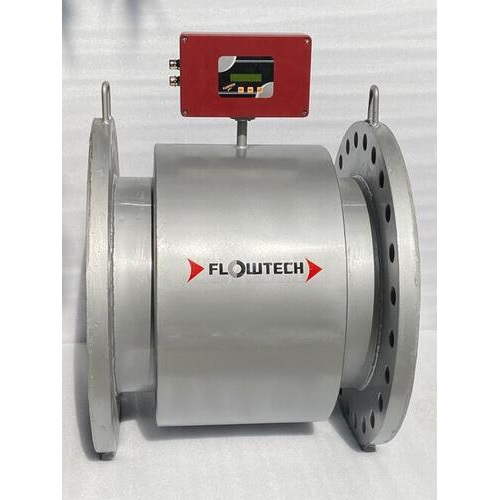
HDPE Electromagnetic Flow Meter
Price 18000 INR / Piece
Minimum Order Quantity : 1 Piece
Accuracy : 0.5% of reading
Material : HDPE (High Density Polyethylene)
Operating Temperature : 10C to +60C
Measuring Voltage Range : 24V DC/220V AC
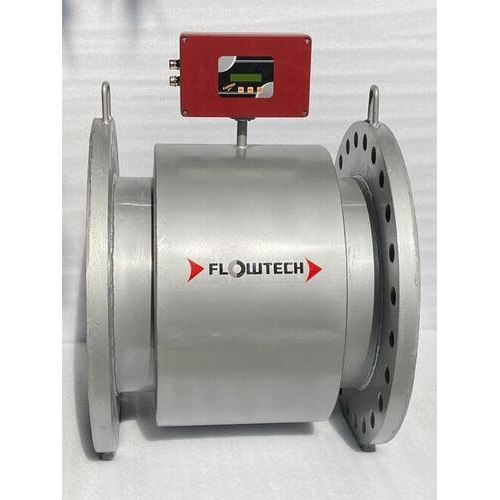
Flow Meter
Price 18000 INR / Piece
Minimum Order Quantity : 1 Piece
Accuracy : +/ 1% FSD Optional: +/0.5% FSD. %
Material : MS,SS 304, SS 316 & SS 316L
NABL Calibration Service For Water Flow Meters
Price 18000 INR / Number
Minimum Order Quantity : 1 Number
Accuracy : Traceable to NABL; Up to 0.2% or as specified
Material : Calibration Reference Fluids, Flow Laboratory Equipment
Operating Temperature : 10C to 50C
Electromagnetic Digital Water Flow Meter
Price 18000.0 INR / Piece
Minimum Order Quantity : 1 Piece
Accuracy : 0.5 % FSD %
Material : Mild Steel
Operating Temperature : Up to 100 Celsius (oC)
Measuring Voltage Range : 230 V AC / 24 V DC Volt (v)

Contact Details
FLOWTECH MEASURING INSTRUMENTS PVT. LTD.
GST : 24AABCF8314J1ZQ
GST : 24AABCF8314J1ZQ
- 900/2/B, GIDC Estate, Makarpura,Vadodara - 390010, Gujarat, India
- Phone :07971191026
- Send Inquiry
 Send Inquiry
- Mr Nilesh Shah (Managing Director)
- Mobile :07971191026

 Send Inquiry
 Send SMS
 Call Me Free
Quick Enquiry Form
 |
FLOWTECH MEASURING INSTRUMENTS PVT. LTD.
All Rights Reserved.(Terms of Use) Developed and Managed by Infocom Network Private Limited. |
