
 English
 Spanish
 French
 German
 Italian
 Chinese (Simplified)
 Japanese
 Korean
 Arabic
 Portuguese


 Send Inquiry
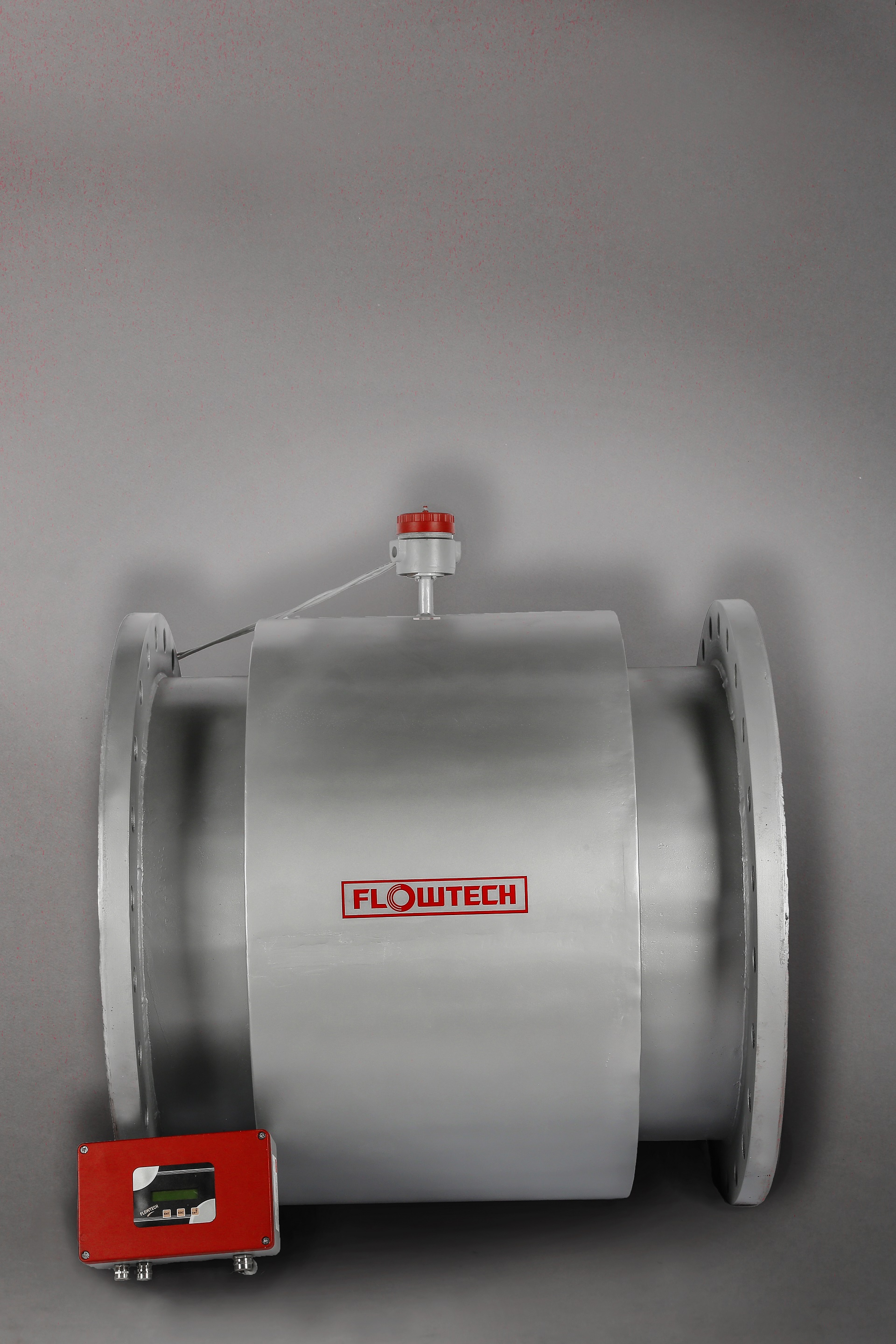
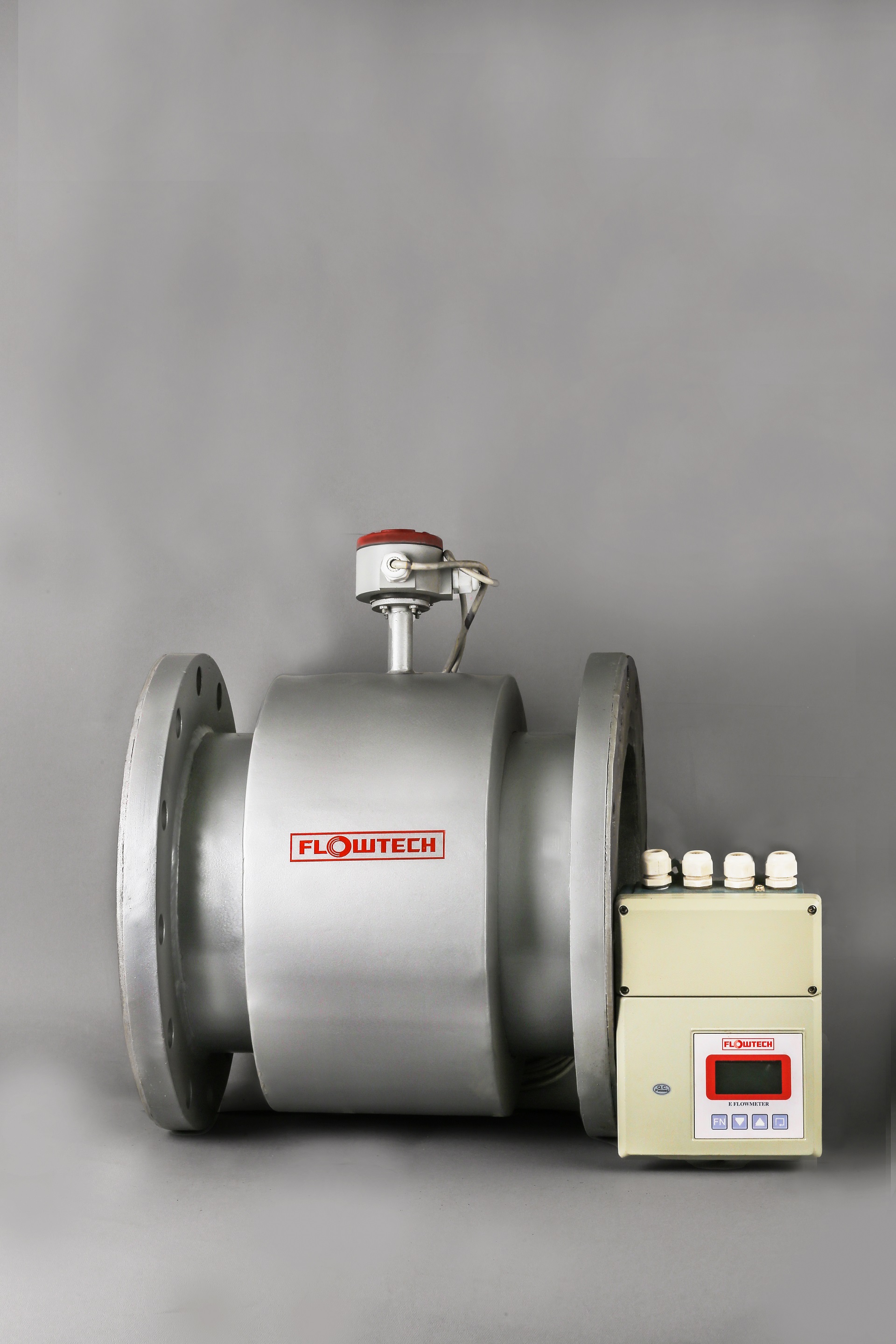
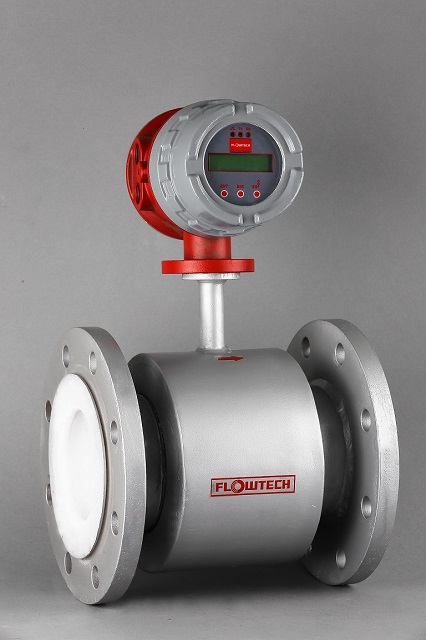
Electromagnetic flowmeters
Price 18000.0 INR/ Piece
MOQ : 1 Piece
Electromagnetic flowmeters Specification
- Pressure
- 0.6 MPa to 2.5 MPa kpa
- Accuracy
- 0.5% of Full Scale %
- Material
- Stainless Steel
- Operating Temperature
- -10 C to +60 C Celsius (oC)
- Weight
- 5 kg - 20 kg Kilograms (kg)
- Display Type
- Digital LCD
- Frequency
- 15 kHz - 80 kHz Hertz (HZ)
Electromagnetic flowmeters Trade Information
- Minimum Order Quantity
- 1 Piece
- FOB Port
- Vadodara
- Supply Ability
- 200 Pieces Per Month
- Delivery Time
- 4 Days
- Sample Available
- Yes
- Sample Policy
- Contact us for information regarding our sample policy
- Packaging Details
- Wooden Box and Customized packing option available
- Main Export Market(s)
- Middle East, Africa, Western Europe, Asia, Australia, Central America, North America, South America, Eastern Europe
- Main Domestic Market
- All India
- Certifications
- ISO 9001:2015
Electromagnetic flowmeters About
Product Description:The Electromagnetic Flowmeter or Mag Meters are suitable for flow measurement in all kinds of conductive fluids, and it is especially suited for flow measurement of Water, Waste Water, Sludge and other fluids containing particles. The flow meter is easy to install and put to service.
Measurement :
Electromagnetic flow meters may have either Direct Current (DC) or Alternating Current (AC) excitation. When systems are AC excited, electrostatic and/or electromagnetic noise may influence the measurements. A DC excited system however, is less sensitive to noise produced by electromagnetic induction, simply because the voltage induced over the electrodes will be a DC voltage. The drawbacks are measurement errors due to electro-chemical polarization between the electrodes and the fluid.The Electromagnetic Flow Meters are excited by a 2.5 Hz square wave and thereby eliminate the drawbacks of both DC and AC systems.A microprocessor receives and measures the amplitude of the pulse with a 16 - bit resolution, and converts and displays the result on the display unit.
Working Principle:
- This is working on the principal of faraday`s law which states that when a conductor moves through a magnetic field of a given strength a voltage is produced in the conductor and proportion to the relative velocity between the conductor and the magnetic field.
Applications:
- Scientific laboratory
- Research centres
- Chemical industries
Specifications:
- Material of Construction: MS, SS 304, SS 316 & SS 316L
- Process Pressure: Max. 25 kg/cm2
- Process Temperature: Max. 150C
- Nominal Dia (mm): 15 to 1400mm
- Material of Construction: MS, SS 304, SS 316 & SS 316L
- Electrode Material: SS 316, SS 316L, Hastelloy c, & Tantalum
- Process Pressure: Max. 25 kg/cm2
- Process Temperature: Max. 150C
- Flow Tube Material: SS 316
- End Connection: Flange/Wafer
- Flange- Standard: ANSI B 16.5 150 #RF / 300 # RF
- Measuring Range: 0.5 m/sec for Minimum & 5m/sec for Maximum
- Accuracy: 1%
- FSD Optional: 0.5% FSD
- Repeatability: 0.3%
- Display: 2 Line Alfa Numeric LCD
- Display Version: Integral /Remote
- Display Unit: Standard Unit in M3, Litre
- Power Supply: 230 VAC, 110 VAC & 24 VDC
- Output: Std. 4 20 mA
- Protection Class for Sensor: IP 65
- Protection Class for Transmitter: IP 65
- Cable Length for Remote: 30meters
- metersInstallation: Inline Flange Type.
Digital Water Flow Meter Applications
Water flow meters can measure cold water, hot water, clean water, dirty water and slurries
Indian Market
Indian States:Telangana, Tamil Nadu, Mizoram, Jharkhand, Arunachal Pradesh, Manipur, Tripura, Kerala, Gujarat, Maharashtra, Madhya Pradesh, Rajasthan, Uttar Pradesh, Orissa, Uttarakhand, Assam, Sikkim, Nagaland, Chhattisgarh, Tamil Nadu, Jammu and Kashmir, Haryana, West Bengal, Goa, Delhi, Bihar, Punjab, etc.
International Market
Asian Countries:Indonesia, Thailand, Malaysia, Singapore, Nepal, Bangladesh, etc
Europe: France, Poland, Spain, etc
Gulf Countries: Saudi Arabia, United Arab Emirates,etc..
Advanced Flow Measurement Technology
Leveraging stainless steel construction and sophisticated electromagnetic principles, these flowmeters offer reliable measurements even in harsh environments. Their adaptability to a wide frequency range ensures stable performance across different fluid types and applications.
Digital LCD Display for Clarity
Each flowmeter features a clear, digital LCD display for user-friendly data interpretation. This ensures operators always have access to critical information, enabling quick response and improved process management in real-time.
FAQ's of Electromagnetic flowmeters:
Q: How do electromagnetic flowmeters operate within the specified frequency and pressure ranges?
A: Electromagnetic flowmeters function by generating a magnetic field using coils operating between 15 kHz and 80 kHz. As conductive fluids flow through the stainless steel measuring tube, they induce a voltage proportional to the flow rate. The device accurately measures this voltage within pressure ranges of 0.6 MPa to 2.5 MPa.Q: What are the main benefits of using a stainless steel electromagnetic flowmeter?
A: Stainless steel construction offers superior resistance to corrosion and mechanical wear, making these flowmeters suitable for a wide variety of chemicals and industrial processes. This durability ensures longevity and dependable performance in demanding settings.Q: When should you use an electromagnetic flowmeter over other types?
A: An electromagnetic flowmeter is ideal when measuring the flow of conductive liquids, especially in situations demanding high accuracy (0.5% of full scale) and low maintenance. They work best in environments operating between -10C to +60C and within pressures of 0.6 MPa to 2.5 MPa.Q: Where are these stainless steel electromagnetic flowmeters typically installed?
A: These flowmeters are widely used in industries such as water treatment, pharmaceuticals, food processing, and chemicals. Their versatility and robustness allow installation in both indoor and outdoor locations, provided the operating temperature and pressure limits are maintained.Q: What is the process for installing and using an electromagnetic flowmeter?
A: Installation involves mounting the flowmeter into the pipeline, connecting it to electrical power, and grounding as specified. Calibration is done upon startup, after which the built-in digital LCD provides real-time readings, simplifying monitoring and control.Q: How does the digital LCD display enhance the user experience?
A: The digital LCD display offers instantaneous and clear readings, reducing the risk of errors. This feature streamlines workflow by enabling operators to make timely decisions based on accurate, easily accessible data.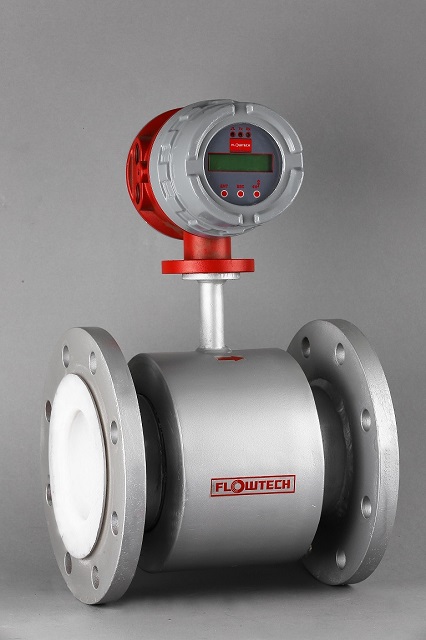
Tell us about your requirement

Price:
Quantity
Select Unit
- 50
- 100
- 200
- 250
- 500
- 1000+
Additional detail
Mobile number
Email

More Products in Electromagnetic Flowmeter Category

Full Bore Electromagnetic Sludge Meter
Price 18000 INR / Piece
Minimum Order Quantity : 1 Piece
Material : MS, SS 316, 304
Size : 25 NB to 1300mm Available
Warranty : 12 Months from Installation OR 18 Months from Delivery.
Product Type : Magnetic flowmeter
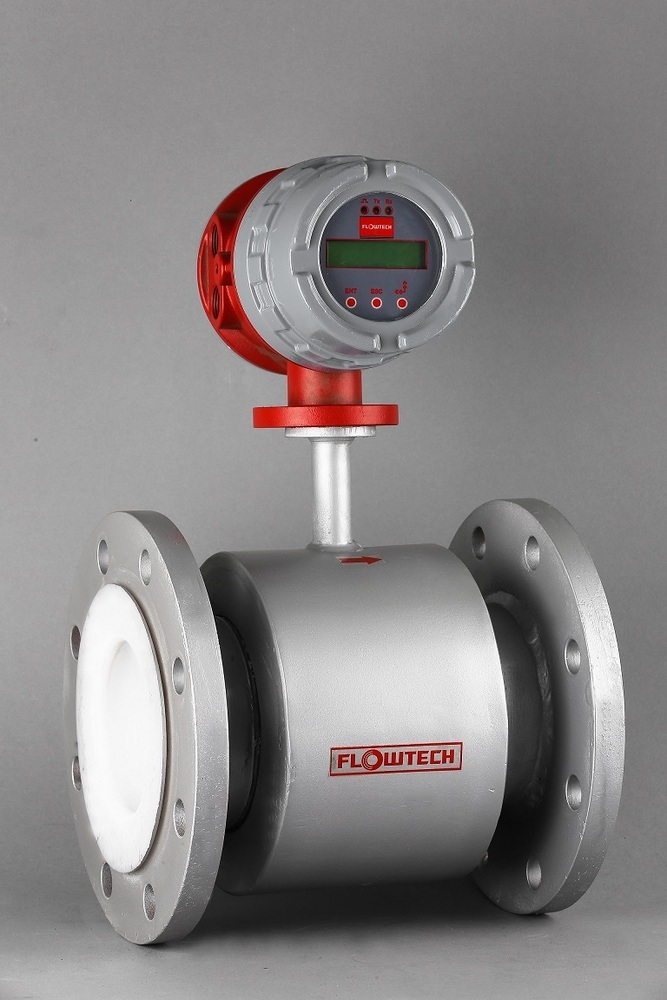
Effluent Water Flow Meter
Price 18000.0 INR / Piece
Minimum Order Quantity : 1 Piece
Material : SS
Size : Standard
Warranty : 1 Year
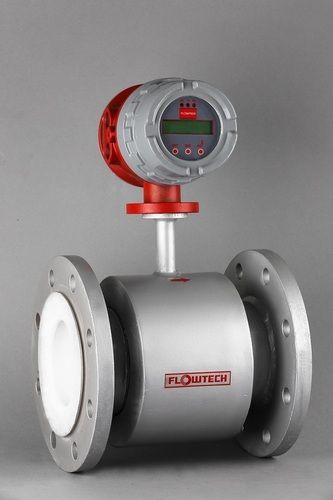
Electromagnetic Flowmeter
Price 18000.0 INR / Piece
Minimum Order Quantity : 1 Piece
Material : MS, SS.04, SS.316
Size : 25 NB to 1500mm Available
Warranty : 12 Months from Installation OR 18 Months from Delivery.
Product Type : Magnetic flowmeter
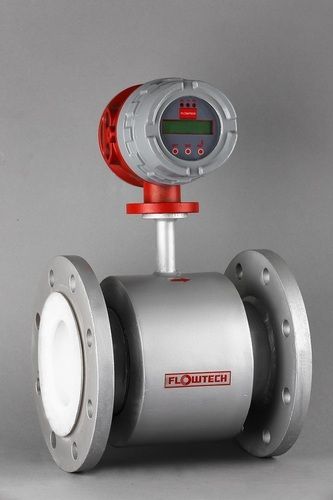
Full Bore Type Electromagnetic Flow Meter
Price 18000 INR / Piece
Minimum Order Quantity : 1 Number
Material : MS, SS.04, SS.316
Size : 25 NB to 1300mm Available
Warranty : 12 Months from Installation OR 18 Months from Delivery.
Product Type : Full Bore Type Electromagnetic Flow Meter

Contact Details
FLOWTECH MEASURING INSTRUMENTS PVT. LTD.
GST : 24AABCF8314J1ZQ
GST : 24AABCF8314J1ZQ
- 900/2/B, GIDC Estate, Makarpura,Vadodara - 390010, Gujarat, India
- Phone :07971191026
- Send Inquiry
 Send Inquiry
- Mr Nilesh Shah (Managing Director)
- Mobile :07971191026

 Send Inquiry
 Send SMS
Quick Enquiry Form
 |
FLOWTECH MEASURING INSTRUMENTS PVT. LTD.
All Rights Reserved.(Terms of Use) Developed and Managed by Infocom Network Private Limited. |
